
Sensory Bin Ideas for Special Education & Autism
By Natalie · Special Education Teacher · July 12, 2026
A sensory bin is a container filled with a hands-on base material — rice, beans, water beads, sand — plus small objects to scoop, pour, sort, and discover. For students in special education and autism classrooms, sensory bins are far more than play: they build fine motor skills, support self-regulation, and create a naturally motivating space to practice language, math, and early concepts.
Why sensory bins work
Many students learn best by doing, and sensory bins are doing at its purest. Scooping and pouring strengthen the same hand muscles used for writing. Digging for hidden objects builds focus and persistence. And for students who seek sensory input, a bin offers a calm, contained outlet that can head off dysregulation before it starts.
They're also endlessly adaptable — one bin can target fine motor, vocabulary, counting, letters, or colors just by changing what you hide inside.
Sensory bin ideas by skill
- Fine motor — bury objects in rice and dig them out with fingers, scoops, or tongs. (More in the fine motor guide.)
- Language — hide themed objects and name them as they're found, using a frame like "I found a ___."
- Math — hide numbered objects to count and sort, or scoop and count spoonfuls.
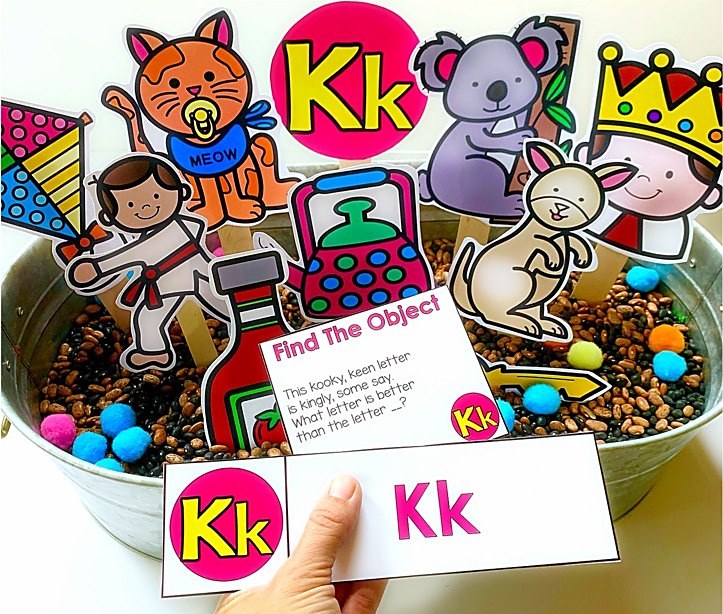
- Literacy — bury letter tiles to find and match, or hunt for beginning sounds.
- Colors and sorting — dye the base material and sort objects by color or category.
Setting them up
- Use a shallow, contained bin with a tray or mat underneath to catch spills.
- Start with one base material (dry rice is cheap and easy) and rotate themes to keep it fresh.
- Model how to use it — hands stay in the bin, materials stay inside — and teach the routine before turning students loose.
- Store themed objects in labeled bags so you can swap the focus in seconds.
A sensory bin also makes a perfect independent work station or task box once the routine is established.
Where to start
Begin with one bin and one skill — say, digging for hidden letters — and build from there. Printable themed picture cards, mats, and hidden-object sets make it easy to give any bin a focus; browse the hands-on autism tasks here to build your rotation.
Looking for more? Browse all Guides & Resources, or contact us with questions.